The sound is the specification
By Marco Bellini, Zurich ·
A minute repeater is a small musical instrument with a watch attached. You judge it by ear first and by eye second, and that is the only complication where I put the movement in second place.
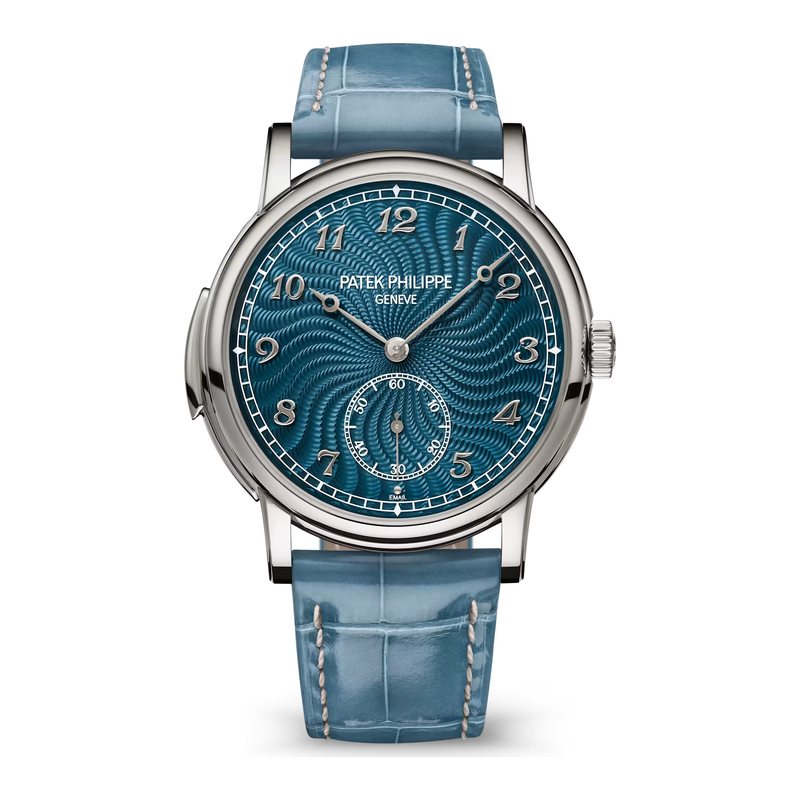
The R 27 PS is Patek's automatic repeater on a micro-rotor base. That matters acoustically: the rotor sits in the plane of the movement and doesn't cover the gongs or dampen them the way a full rotor would. The 5078 uses cathedral gongs, longer gongs wrapped more than once around the movement, which give a deeper and longer note than standard ones. Then there's the governor that keeps the strikes evenly spaced, and the hammers whose strength has to be adjusted by someone with a good ear and a lot of patience. Every repeater is regulated by hand at the end. There's no shortcut.
People ask me why a repeater costs so much when the parts are not that many. The answer is that the parts must agree with each other. The rack and the snails read the time, the all-or-nothing piece stops the repeater from striking a wrong time if the slide isn't fully drawn, the gongs are tuned, then the case itself is tuned with them, because gold and its thickness change the note. Change the case and the sound changes. That last part is why a repeater is never really finished until it has been listened to in its own case, by someone who knows what he is hearing, many times, with small adjustments in between.
Julien could give you the history of Patek's repeaters far better than me. I only know what's in the case.
38 mm by 10.1 mm in white gold, white dial, 20 mm lugs. Small, quiet, discreet. 30 m, and with a slide in the case flank you'd be foolish to take it near water. 48 hours, and being automatic it stays running if you wear it, which on a repeater is a practical choice.
Criticism. 500,000 to 550,000 USD, and you cannot simply walk in and buy one. And the case is so discreet that nobody will know what you're wearing until you press the slide. That last part is fine with me.
Who should buy it: someone who will actually use the repeater and listen to it. Not someone who'll keep it in the safe. A repeater that never strikes is a waste of a great deal of skilled work.