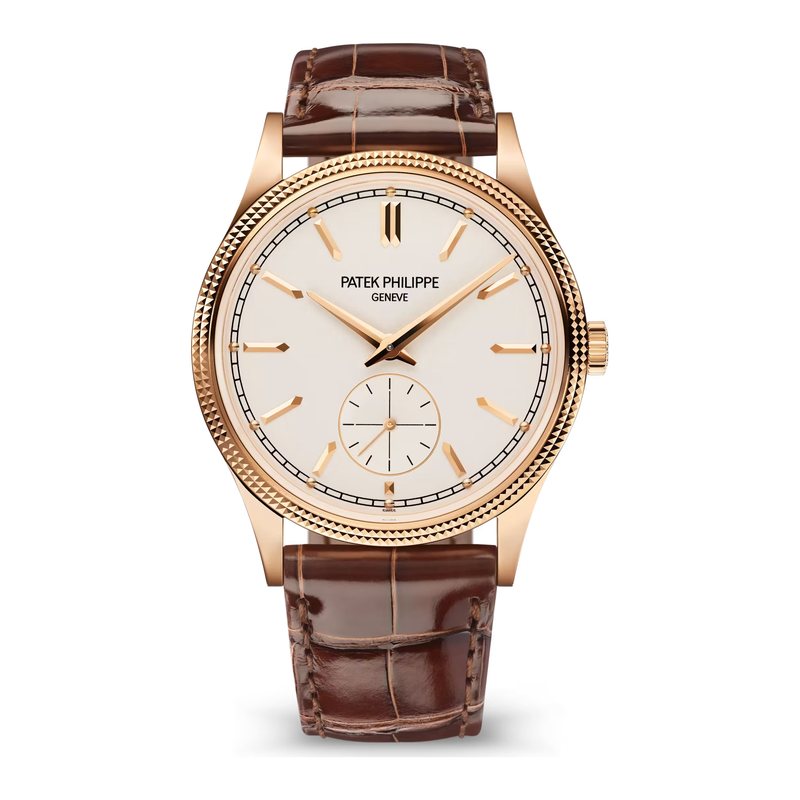
Hobnails, and the end of an argument
By Julien Moreau, Geneva ·
The ref. 96 of 1932 is the watch every Patek specialist pretends to be bored by and secretly checks for in every catalogue. It is the first Calatrava, a small round case, a plain dial and the idea, borrowed from the Bauhaus or at least from the people who read about it, that a watch could be beautiful by leaving things out.
For decades the most collected modern descendants were the 3919 and then the 5119, both with the Clous de Paris hobnail bezel that collectors either adore or regard as an affectation. Patek replaced the 5119 and its plainer sibling with the 6119 in 2021, and it seems to me to settle the old argument in favour of the hobnails.
This is the rose gold version: 39 mm across and only 8.08 mm thick, a silver dial with applied hour markers, small seconds at six, the hand-wound 30-255 PS with 65 hours, open back, leather strap. That reserve is the improvement I notice most. You can wind it on Friday and still find it running on Monday, which a dress watch has not always been able to promise.
My criticisms are both about inheritance. Thirty-nine millimetres is larger than a Calatrava purist would like, and I count myself among those purists; the old ones were 31 to 36 mm and wore like a well-cut collar. And thirty-three to thirty-five thousand dollars is steep against a Vacheron Traditionnelle in gold for ten thousand less.
I would still have the Patek. I would simply grumble more quietly than usual.