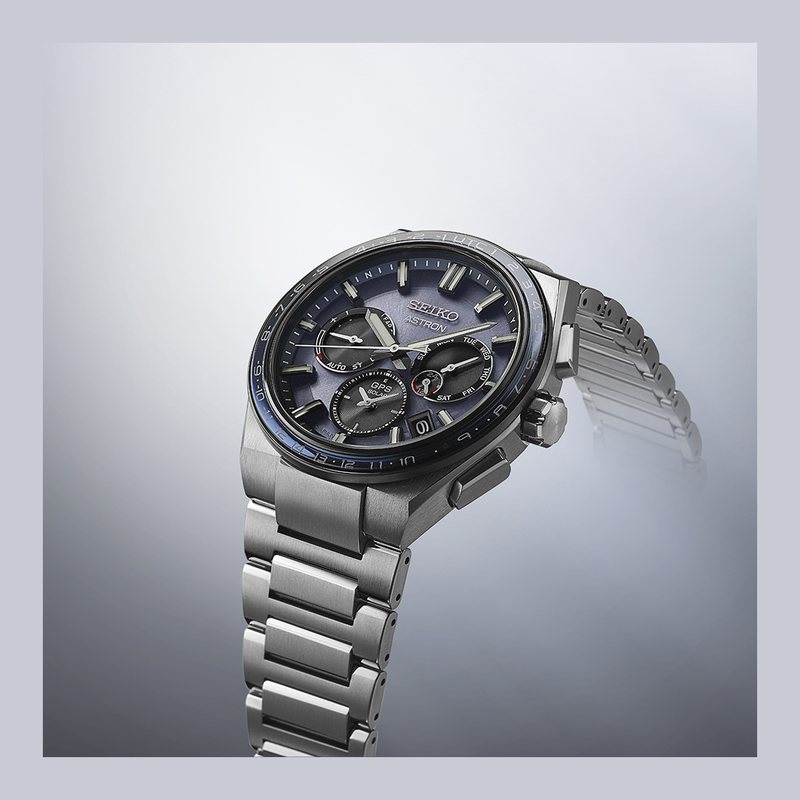
Precise, light, and a bit anonymous
By Kenji Watanabe, Osaka ·
Seiko launched the first GPS solar watch in 2012 under the Astron name, reusing the name of its 1969 quartz pioneer, and the 5X53 is a mature descendant. It takes its time from GPS satellites, sets itself to the local time zone when you land, and shows a second time zone with day and date.
As an engineer I admire it. It solves a real problem, the traveller's problem, and it solves it with light alone. Titanium case and bracelet, 42.8 by 12.2 mm, sapphire, 100 m, blue dial. It would be light enough for a long-haul flight and a hot taxi queue at Kansai Airport afterwards.
As a watch lover I am less moved. The dial is technical without much personality, and the case could belong to several brands. At 2,200 to 2,400 dollars it meets the Citizen Satellite Wave head on, and I would choose between them by which dial I could look at for ten years.
One practical point for readers in Japan: radio-controlled watches already keep perfect time here for far less money. The GPS only pays for itself if you cross borders often.