Grand Seiko does the hard part
By Marco Bellini, Zurich ·
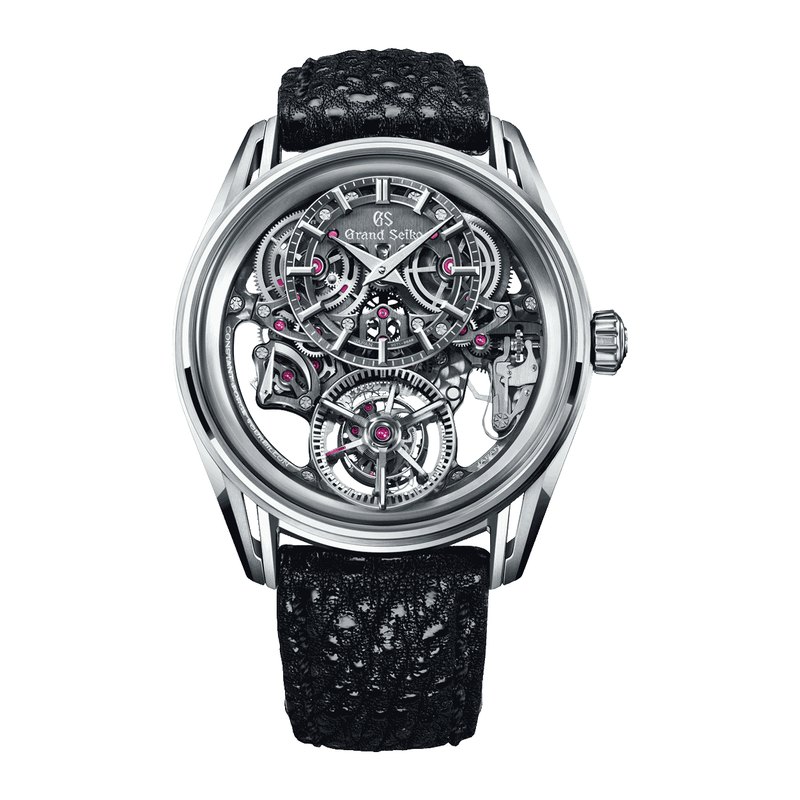
I expected a show piece and found an engineering argument, which is better: in the 9ST1 the constant-force mechanism and the tourbillon share one axis, the one mechanism nested with the other, so the balance is rotated and fed a steady impulse at the same time, and doing that in a hand-wound watch of 43.8 mm by 12.9 mm meant solving problems of space and mass that most brands avoid by simply putting the two side by side.
Kodo means heartbeat. You understand the name when you see the constant-force spring tick through its cycle once a second.
Kenji knows the history of Grand Seiko far better than I do. I'll stay with the parts.
The open architecture means there is no dial in the usual sense, and reading the time takes a second look, sometimes a third. The platinum case is heavy. And 50 hours is short for a watch at this level. I would have accepted a thicker case for more reserve.
370,000 USD. That is a lot of money for a first attempt at something this complicated, and it was a first attempt, however good. Who should buy it: someone who already owns the Swiss and German answers and wants to see the Japanese one. Not someone buying their first expensive watch.