Tritium at 3 a.m.
By Rafael Ortiz, Mexico City ·
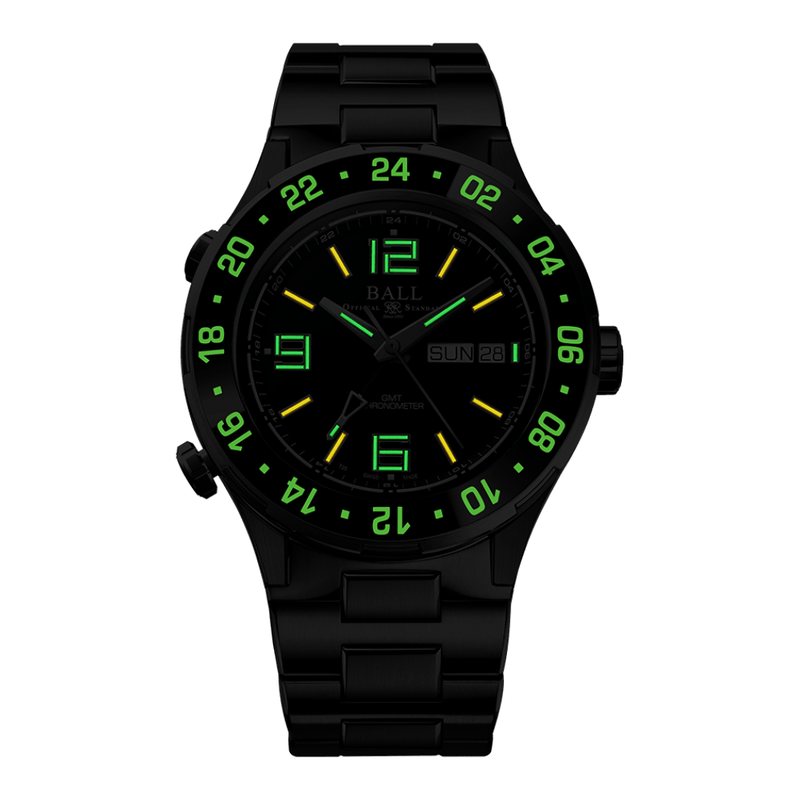
Somewhere over the Pacific, maybe four hours out of Tokyo, the cockpit gets as dark as it's going to get. The panel is dimmed right down, the captain is on his rest break, and every watch you own suddenly shows you what its lume is really worth. Most painted lume has given up by then. Tritium tubes haven't.
That's the whole case for the Ball Roadmaster Marine GMT, and it's a strong one. The tubes glow all night without needing a charge, so the hands and markers are readable in the hour that matters. Add a rotating 24-hour bezel and a GMT hand, and you have a proper three-zone setup on a 40 mm case that's 13.3 mm thick. That's sensible sizing. The 20 mm bracelet and 200 m of water resistance round it out.
Now the downsides. Ball's dials are busy and the branding gets wordy. The 42-hour reserve is the old ETA-era number, which means a weekend off the wrist and it's probably stopped. And at 2,700 to 3,000 dollars you're in the same street as a Longines Zulu Time, which has a better GMT movement and a lot more polish.
If you work nights, fly nights, or just hate holding a watch under a lamp to recharge it, this one makes sense. If you mostly wear watches in daylight, buy the Longines.